
Blog Details
Your Baby's First Month: What a Pediatrician Checks and Why It Matters
Your Baby's First Month: What a Pediatrician Checks and Why It Matters

The first month with a newborn is a lot, and most parents feel that. You're running low on sleep, full of questions, and not always sure what's normal. That's exactly why the one-month pediatric visit matters so much. It's not just a weigh-in. The doctor checks several things at once and makes sure both the baby and the parents are doing okay. Finding the best pediatric doctor near Patia for newborn baby care early on is one of the most practical decisions a new parent can make.
Doctors usually want to see newborns within 3 to 5 days of coming home, then again at one month. That's not paranoia. Babies change fast, and small things at home can turn out to need attention.
By one month, the doctor gets a real read on feeding and weight gain, stuff that's hard to assess right after birth. It's a useful visit even when everything seems fine.
Don't wait for something to feel obviously wrong. Newborns don't always act sick when something's off. That's kind of the whole point of checkups at this age. This is exactly why regular checkups matter so much at this stage.
The one-month visit is basically a head-to-toe check. The doctor is not just going through a checklist. Each part of the exam tells them something about how your baby is actually doing. Here is what usually gets checked at the one-month visit:
The doctor will also ask how you are holding up. Postpartum anxiety and exhaustion hit harder than most people expect, and a good pediatrician keeps an eye on the whole family, not just the baby.
Vaccines are usually discussed around the one-month visit, and some parents feel unsure about them. That is normal. Here is why they matter.
A newborn's immune system is still new. It can handle some things on its own, but serious infections like Hepatitis B can cause lasting damage before the body even has a chance to fight back. Vaccines prepare the body early by safely introducing specific threats.
The one-month visit is a good time to review the vaccination schedule and ensure everything is on track. Staying current with vaccinations is one of the easiest ways to protect your baby during the most vulnerable months. The schedule is designed around when babies are most at risk, so following it just makes sense.
Read Next: Why These Pathology Tests Matter More Than You Think?
Growth charts tell more than they do at first glance. One measurement means nothing on its own. What matters is whether the baby is following their own curve consistently from visit to visit.
A baby who was small at birth but is gaining steadily is doing fine. A baby who started well but has slowed down might need a feeding check. The pediatrician connects those dots, which is why seeing the same clinic regularly matters.
Weight is only part of it. At one month, the doctor also watches for signs such as whether the baby reacts to sounds, follows a moving object with their eyes, or shows early social awareness. These are easy to miss at home, but easy to catch for someone who knows what to look for.
A trusted kids doctor in Bhubaneswar for fever and infections will tell you that in the first month, you don't wait and watch.
Fever in a newborn is handled very differently from fever in an older child. In the first month, any fever above 38 degrees Celsius needs attention right away. Babies at this age cannot fight infections the way older ones can, so a small infection in a six-month-old can turn serious fast in a one-month-old. Go to the doctor immediately if your baby has:
The first month moves fast and can feel like a lot to take in. Having the right doctor makes it easier, someone who checks things carefully, explains what is going on, and makes sure both the baby and the parents feel taken care of.
If you are looking for an expert pediatric doctor near Patia for newborn care, OM Healthcare's team is ready to help. Contact today to schedule an appointment and get your baby in before the little things become big things.
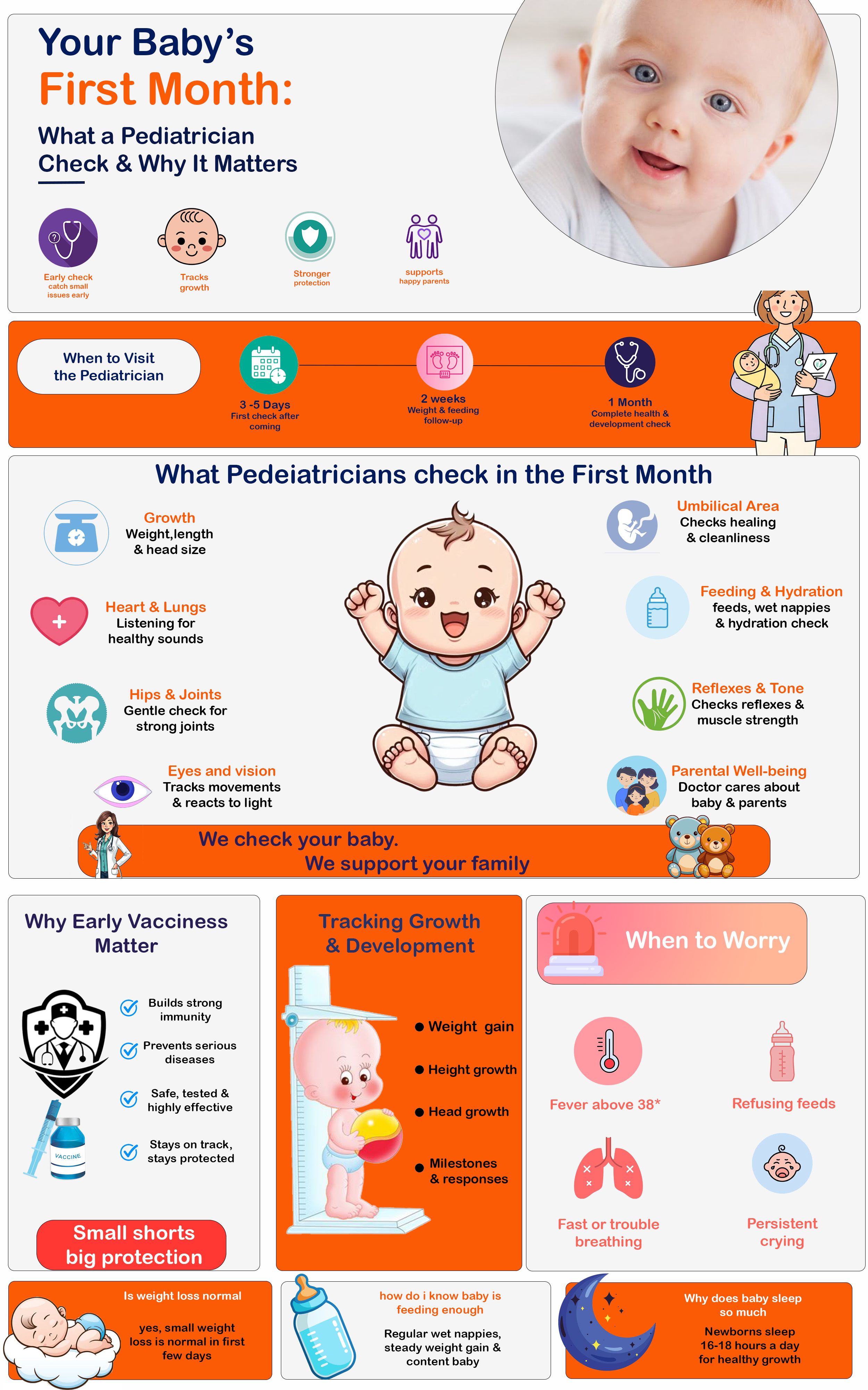
Yes, most babies lose a small amount of weight in the first few days, but a pediatrician will monitor this closely to ensure they regain it within the first two weeks.
A well-fed baby will have regular wet nappies, seem settled after feeding, and gain weight steadily, which is exactly what the doctor checks at early visits.
Newborns sleep most of the day because their brains and bodies are growing rapidly, but a pediatrician will check that the sleep pattern is normal and that the baby wakes to feed regularly.